






Managing PCOS Hairiness: A Clinical Guide to Hirsutism and Skin Confidence
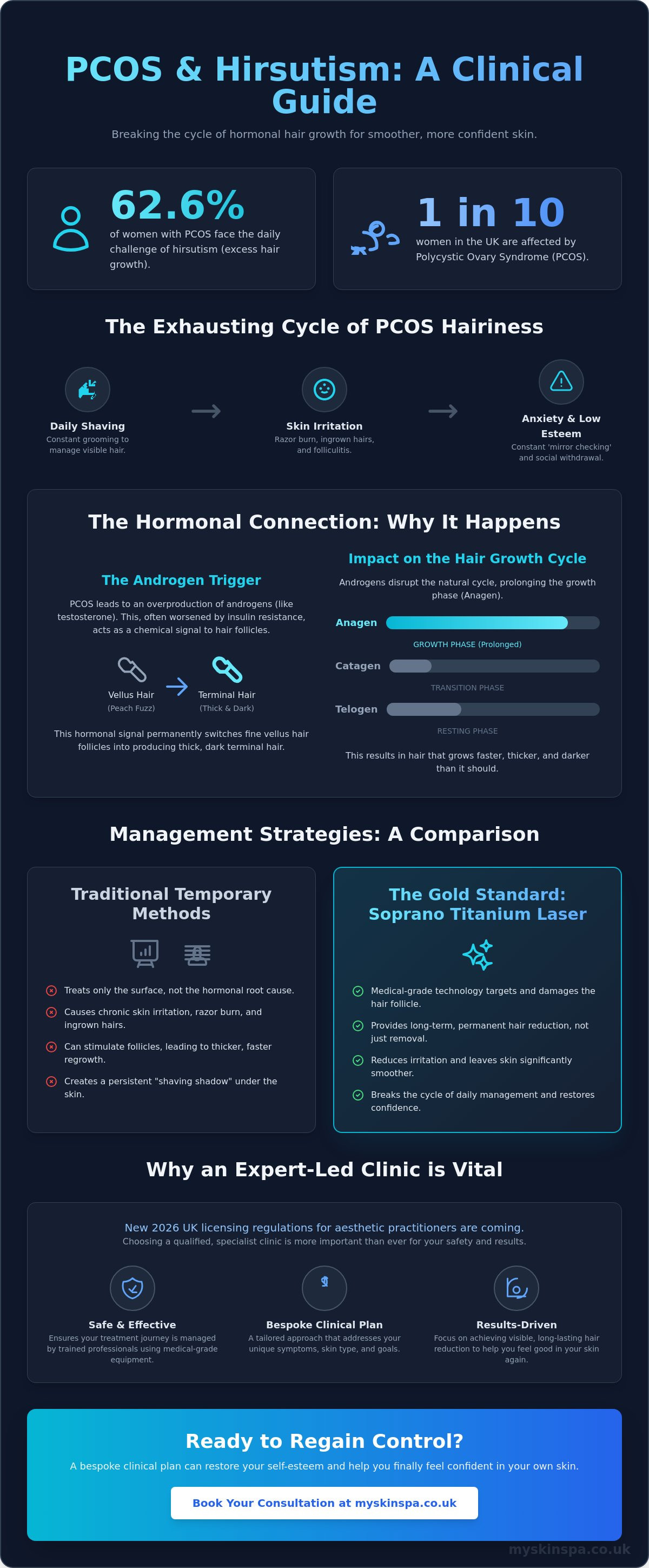
Did you know that 62.6% of women living with Polycystic Ovary Syndrome face the daily challenge of hirsutism? This struggle with pcos hairiness often feels like a relentless battle against your own biology. You've likely spent years stuck in a painful cycle of daily shaving, plucking, and concealing the "shadow" that leaves your skin irritated and your confidence shaken. It's exhausting to feel as though your hormones are betraying you, yet you aren't alone; PCOS affects at least 1 in 10 women in the UK. We know the anxiety of visible facial hair can be overwhelming, but clinical solutions exist to break the cycle.
At My Skin Spa Clinic, we believe you deserve to feel good in your skin. This guide explores the clinical causes of hormonal hair growth and the medical-grade treatments designed to help you regain control. You'll discover how advanced, expert-led technologies like Soprano Titanium laser hair removal provide long-term reduction and smoother skin. Given the new 2026 UK licensing regulations for aesthetic practitioners, choosing a qualified specialist is now more vital than ever. We'll provide a roadmap to help you move past the irritation and restore your self-esteem, empowering you to feel truly transformed, rejuvenated, and confident in your own skin.
Key Takeaways
- Understand the clinical link between androgen levels and terminal hair follicles to better manage the root cause of your symptoms.
- Discover why medical-grade Soprano Titanium technology is the gold standard for managing pcos hairiness compared to traditional IPL or daily shaving.
- Learn how to break the exhausting cycle of "mirror checking" and skin irritation by achieving long-term, permanent hair reduction.
- Identify the importance of choosing a licensed, expert-led clinic to ensure your treatment journey is safe, effective, and results-driven.
- Explore how a bespoke clinical plan can restore your self-esteem and help you finally feel good in your skin.
Understanding PCOS Hairiness: What is Hirsutism?
Understanding the clinical definition of hormonal hair growth is the first step toward reclaiming your skin confidence. In a professional medical setting, What is Hirsutism? refers to the presence of terminal hair in a male-pattern distribution on a woman's body. This isn't merely "extra" hair. It represents a fundamental biological shift where fine, translucent vellus hair, commonly known as peach fuzz, transitions into thick, dark, and deep-rooted terminal hair. For the 62.6% of women with PCOS who experience this, the change typically occurs in androgen-sensitive zones. You might notice these persistent hairs appearing on the chin, upper lip, chest, and lower abdomen. It's a visible symptom of an internal hormonal imbalance that often feels beyond your control.
The primary driver behind pcos hairiness is the overproduction of androgens, specifically testosterone. While all women produce these hormones, PCOS causes the ovaries to release them in higher concentrations. These androgens act as a chemical signal to your hair follicles. Once a follicle is "switched" from producing vellus hair to terminal hair by these hormonal triggers, the change is usually permanent without clinical intervention. This is why standard grooming methods often feel like a losing battle; you're treating the surface of a deep-seated hormonal response.
The Hormonal Connection Explained
Insulin resistance acts as a catalyst for these changes. When your body doesn't process insulin effectively, it signals the ovaries to produce even more testosterone. This creates a cycle where your hair follicles become hypersensitive to every hormonal fluctuation. This sensitivity directly interferes with the natural hair growth cycle. Typically, hair moves through anagen (growth), catagen (transition), and telogen (resting) phases. In cases of pcos hairiness, the androgens prolong the anagen phase in facial and body follicles. This results in hair that grows faster, thicker, and darker than it should. Understanding this cycle is vital because medical-grade treatments must be timed to catch the hair in its active growth phase to be effective.
Symptoms Beyond Excess Hair
PCOS is a complex metabolic condition that rarely presents with a single symptom. Beyond hirsutism, many women identify concurrent skin concerns like adult acne or acanthosis nigricans, which causes dark, velvety patches of skin in areas like the neck or armpits. You might also notice an increase in skin tags, which are often linked to the same insulin resistance that drives hair growth. While your GP is the essential first port of call for managing irregular cycles and internal health, a clinical consultation at a specialist centre addresses the physical and emotional burden of these symptoms. We focus on the aesthetic restoration that helps you feel good in your skin again, bridging the gap between medical diagnosis and visible results.
The Emotional and Physical Impact of Polycystic Ovary Hair
The weight of living with PCOS isn't just about hormonal levels; it's about the emotional toll of looking in the mirror every morning and feeling like your body is working against you. Constant "mirror checking" becomes a subconscious habit, leading to significant social anxiety and a desire to hide away. This Emotional and Physical Impact of Polycystic Ovary Hair can be deeply isolating. Statistics show that 62.6% of women with PCOS struggle with these visible symptoms, often describing a feeling of "betrayal" where the simple act of leaving the house requires hours of meticulous grooming.
Beyond the mental strain, the physical consequences of managing pcos hairiness through traditional methods are often painful. Daily shaving or aggressive plucking causes chronic skin irritation, resulting in painful ingrown hairs and permanent scarring. Then there's the "shaving shadow," a persistent greyish tint that even the heaviest foundation can't fully camouflage. This shadow serves as a constant reminder of the condition, eroding confidence during every face-to-face interaction. Managing pcos hairiness effectively means moving beyond the razor and toward medical-grade technology to facilitate true skin rejuvenation.
The Daily Struggle of Temporary Methods
Temporary removal methods often do more harm than good. When you pluck or wax, you inadvertently stimulate blood flow to the follicle, which can actually nourish the hair and encourage it to grow back thicker. This triggers a relentless irritation cycle of razor burn, folliculitis, and post-inflammatory hyperpigmentation. The shaving trap is a punishing cycle where the urgent need for a smooth surface causes skin trauma that eventually makes the underlying hair more prominent and harder to treat.
Restoring Your Self-Confidence
True transformation begins when you stop merely managing symptoms and start treating the cause. Clinical interventions provide more than just a reduction in hair; they offer emotional restoration and a sense of freedom. When you no longer have to plan your life around a shaving schedule, your self-esteem naturally begins to bloom. Our purpose is to help you feel good in your skin by bridging the gap between medical necessity and aesthetic wellness. If you're ready to break free from the daily struggle, you can book a consultation to discuss a bespoke treatment plan tailored to your unique hormonal profile. We focus on results that allow you to transform rejuvenate glow.
Traditional vs. Clinical Management Strategies
Relying on high-street solutions for pcos hairiness often leads to a cycle of frustration and skin damage. Shaving, waxing, and depilatory creams offer only fleeting relief, typically lasting less than 24 hours before the "shadow" returns. These methods fail to address the biological root of the issue. Clinical research into hirsutism symptoms and causes confirms that hormonal hair is significantly more resilient than standard body hair. This resilience makes Intense Pulsed Light (IPL) largely ineffective for long-term results. Unlike medical-grade lasers, IPL uses a broad spectrum of light that lacks the depth and precision required to permanently disable androgen-stimulated follicles. Whilst prescription creams like eflornithine can slow growth, they don't remove the hair itself, making them a temporary management tool rather than a definitive solution.
Professional aesthetic procedures offer a more stable path toward skin confidence. By choosing a clinical environment, you move away from the guesswork of home-care and into an expert-led framework. This transition is essential for those who have spent years battle-worn by the daily demand of grooming. We focus on technological responses that provide visible, lasting success, ensuring your skin remains healthy throughout the process.
Why Shaving and Waxing Often Fail PCOS Patients
The rapid regrowth cycle associated with high androgen levels is relentless. Plucking a hair today doesn't stop the next one from entering the anagen phase almost immediately. This constant removal causes repeated trauma to the skin, leading to chronic inflammation and long-term pigmentation. Over time, the skin can become thickened and discoloured, creating a new set of aesthetic concerns. You can explore the specific risks of these methods in our guide on Managing Female Facial Hair in Stourbridge. Breaking this cycle requires a move toward technology that targets the follicle without wounding the surrounding tissue.
The Clinical Advantage: Beyond the Surface
A professional clinic manages your underlying skin health through a bespoke treatment programme. We don't believe in a "one-size-fits-all" approach because hormonal conditions require precision. Expert-led clinics provide a much higher safety profile than standard high-street salons, which is vital given the 2026 UK regulations for non-surgical cosmetic procedures. Our practitioners are trained to monitor your skin's specific response, adjusting clinical parameters to ensure safety and efficacy. This level of care allows you to transform rejuvenate glow with total peace of mind, knowing your journey is guided by specialists who understand the complexities of PCOS.
The Science of Permanent Reduction: Soprano Titanium for PCOS
Modern diode laser technology has fundamentally changed the outlook for women managing pcos hairiness. While some outdated sources suggest that laser is ineffective for hormonal growth, advancements in medical-grade equipment like the Soprano Titanium prove otherwise. This system is widely considered the gold standard because it utilises 3D technology, combining three of the most effective laser wavelengths into a single applicator. By targeting different tissue depths simultaneously, it disables the hair follicle's ability to regrow without damaging the surrounding skin. This precision is vital for PCOS patients, whose hair follicles are often deeper and more resilient than standard terminal hair.
The "In-Motion" technology of the Soprano Titanium represents a significant shift in clinical comfort. Traditional lasers often rely on high-intensity "zaps" that can be painful and carry a higher risk of skin trauma. In contrast, this system uses a sweeping motion to deliver energy gradually. This builds up heat in the dermis while the specialised cooling tip protects the surface, making the procedure virtually painless. For those dealing with PCOS-related pigmentation or sensitive skin, this gradual heating is much safer. It allows for effective treatment across all skin types, ensuring that everyone can access the path to smoother, clearer skin.
Laser vs. Electrolysis for Hormonal Hair
When deciding between clinical methods, speed and efficacy are the primary considerations. Electrolysis treats each hair individually, which is a slow and often painful process for large areas like the face, neck, or abdomen. For the density of hair growth typically seen with PCOS, laser is often the preferred choice because it can treat hundreds of follicles in a single session. You can read a detailed breakdown of these two methods in our guide on Electrolysis vs Laser Hair Removal. For most patients, the efficiency of the Soprano Titanium offers a faster route to restoring self-confidence.
Managing Expectations and Results
It's important to understand that pcos hairiness is driven by internal hormonal shifts. Because your body may continue to stimulate new follicles over time, you will likely require more initial sessions than a client without hormonal imbalances. Most PCOS patients benefit from a course of 8 to 12 sessions, followed by occasional maintenance "top-up" appointments to manage any new growth. While no laser technology can claim to be 100% "permanent" in a biological sense, the reduction achieved is life-changing, moving you away from the daily razor and toward a future where you feel good in your skin. If you are ready to start your journey, book your Soprano Titanium consultation today and prepare to transform rejuvenate glow.
Your Journey to Confidence at My Skin Spa Clinic Stourbridge
Managing pcos hairiness is a deeply personal journey that requires more than just a standard beauty treatment; it requires a clinical partnership. At My Skin Spa Clinic, your experience begins with a thorough consultation led by an NHS-trained professional who understands the complex interplay between your hormones and your skin. We don't just look at the hair. We look at the person. This expert-led assessment allows us to create your bespoke Transform Rejuvenate Glow plan, ensuring every session is optimised for your specific skin type and hair density. We bridge the gap between your GP's medical diagnosis and the visible aesthetic results you deserve.
Our Stourbridge clinic is designed to be a welcoming wellness sanctuary that delivers professional medical results. We often combine our Soprano Titanium laser treatments with medical-grade skincare or advanced procedures like the HydraFacial Deluxe to address concurrent issues such as acne or dullness. This holistic approach ensures that as your unwanted hair diminishes, your overall skin health improves. Our purpose is to make you feel good in your skin through a roadmap of expert-led treatments that provide tangible, lasting success.
The My Skin Spa Clinic Clinical Approach
Safety and precision are the cornerstones of our practice. Before your first session, we conduct a detailed skin analysis and a mandatory patch test to ensure maximum safety. This is particularly vital in 2026, as the UK implements stricter licensing for laser practitioners. Our commitment to excellence means we use only the latest premium technology. For those managing the persistent nature of PCOS, our recurring multi-session packages offer the most effective way to maintain results. These programmes allow us to monitor your progress closely and adjust clinical parameters as your hormonal profile evolves over time.
Taking the First Step Toward Glowing Skin
Booking your consultation in Stourbridge is the first step toward reclaiming your self-esteem. To prepare for your first visit, you must stop plucking, waxing, or using depilatory creams for at least four weeks. The laser requires the hair follicle to be present in the root to be effective. However, you should shave the treatment area approximately 24 hours before your appointment. Avoid active skincare ingredients like retinol or strong acids on the area for five days prior to treatment. If you are ready to break free from the cycle of daily hair removal, Book your PCOS hair consultation at My Skin Spa Clinic and begin your transformation today.
Step Into a Future of Skin Confidence
Breaking the cycle of pcos hairiness requires more than just willpower; it demands a clinical response that respects your body's unique hormonal profile. By moving away from the irritation of daily shaving and embracing the precision of world-leading Soprano Titanium technology, you can achieve the long-term hair reduction you've been searching for. Our award-winning clinical aesthetics in Stourbridge provide the expertise you need to stop hiding and start healing. You've spent enough time managing symptoms; it's time to focus on a permanent solution.
Founded by a former NHS professional, My Skin Spa Clinic offers a trusted environment where your aesthetic journey is guided by medical knowledge. We understand that feeling good in your skin is essential for your mental and physical wellbeing. You don't have to navigate these hormonal challenges alone. Our bespoke treatment plans are designed to help you reclaim your time and your confidence through expert-led care. We're here to support you at every stage of your transformation.
Transform your skin and regain your confidence; book your consultation today. It's time to let your inner beauty shine through and finally transform rejuvenate glow.
Frequently Asked Questions
Can PCOS hairiness be cured permanently?
PCOS is a chronic hormonal condition, so there isn't a permanent "cure" for the underlying cause of hair growth. However, medical-grade laser treatments offer significant, long-term reduction that can transform your daily routine. By disabling the active follicles, we can reduce pcos hairiness by up to 90%, though you'll likely need occasional maintenance sessions to manage any new follicles stimulated by future hormonal shifts.
Is laser hair removal safe if I have Polycystic Ovary Syndrome?
Yes, laser hair removal is entirely safe for women with PCOS when performed in a regulated clinical environment. Our practitioners follow the 2026 UK licensing standards to ensure every treatment meets strict safety and efficacy protocols. We use advanced cooling technology to protect your skin, making it a much gentler alternative to the chronic irritation caused by daily shaving or chemical depilatory creams.
How many sessions of laser hair removal will I need for PCOS?
Most PCOS patients require between 8 and 12 initial sessions to achieve optimal results. While a standard client might see success in 6 to 8 visits, the hormonal drive in PCOS means your follicles are more resilient and require more frequent targeting. We space these appointments according to your specific hair growth cycle to ensure we catch as many hairs as possible in the active anagen phase.
Why does my facial hair keep coming back even after plucking?
Plucking only removes the hair shaft temporarily; it doesn't stop the internal androgen signals that tell the follicle to produce thick, terminal hair. In fact, repeated plucking can increase blood flow to the area, which may inadvertently nourish the follicle and strengthen the hair. This is why pcos hairiness feels so relentless; you're treating the surface symptom rather than using clinical energy to disable the follicle's growth mechanism.
Does the NHS cover laser hair removal for PCOS in Stourbridge?
NHS funding for laser hair removal is extremely limited and is often restricted to severe cases that meet very specific psychological or physical criteria. In the West Midlands, local Integrated Care Boards typically categorise this as a cosmetic procedure, meaning most women seek private clinical care. We provide the expert-led, medical-grade alternative that bridges the gap for those who cannot access NHS treatment.
Can I have laser treatment if I am taking medication for PCOS?
Yes, you can safely undergo laser treatment whilst taking most common PCOS medications, such as Metformin or the contraceptive pill. Some anti-androgens like Spironolactone actually work in harmony with laser by slowing down new hair production from within. It's essential to disclose all medications during your consultation, as some rare prescriptions can increase light sensitivity and require us to adjust your clinical parameters.
What is the difference between standard laser and the Soprano Titanium?
Standard lasers often use a single wavelength and a "stamp" method that can be painful and slow. The Soprano Titanium utilizes 3D technology, firing three different wavelengths simultaneously to target various depths of the hair follicle. Its "In-Motion" technique delivers energy gradually, making the experience virtually painless and significantly safer for a wider range of skin tones compared to older, traditional laser systems.
Will losing weight stop my excess hair growth?
Losing 5% to 10% of your body weight can improve insulin resistance and help balance your hormone levels, which may slow the rate of new hair growth. However, weight loss alone won't revert existing terminal hairs back to fine "peach fuzz." Once a follicle has been switched to producing thick, dark hair by androgens, it requires a clinical intervention like laser to effectively disable it and restore your skin's smooth texture.