






How Laser Tattoo Removal Works: The Clinical Science of Ink Clearance
What if your body already possesses the inherent power to erase an unwanted tattoo, but simply lacks the specific tools to begin the process? Many people feel a sense of trepidation when considering treatment. They often worry about potential scarring or feel sceptical about whether light can truly undo permanent ink whilst keeping the skin intact. It's completely normal to feel anxious about the discomfort or the number of sessions required to see results. This guide explains exactly how laser tattoo removal works by shifting the focus from simple erasure to a sophisticated biological partnership designed to shatter clear restore your skin's natural appearance.
You deserve to feel confident, empowered, and comfortable in your own skin once again. We'll demystify the clinical science of ink clearance, transforming your uncertainty into expert-led clarity. This article provides a comprehensive look at the precision of laser technology, the way your body organises its immune response, and the structured path toward your own aesthetic restoration. By the end, you'll have the confidence to move beyond hesitation and start your journey toward skin that feels like you again.
Key Takeaways
- Understand how laser tattoo removal works through selective photothermolysis, a process that shatters ink particles into microscopic dust whilst protecting the surrounding tissue.
- Discover how your immune system's macrophages naturally clear shattered ink via the lymphatic system to restore your skin's original appearance.
- Learn why different laser wavelengths are required to target specific ink colours and how advanced technology ensures faster, more effective results.
- Gain a clear roadmap for your removal journey, including the necessity of clinical patch tests and the professional methods used to ensure your comfort.
- Recognise the value of a clinical setting that combines medical rigour with a sanctuary-like environment for a safe and empowering transformation.
The Science of Light: How Laser Tattoo Removal Works
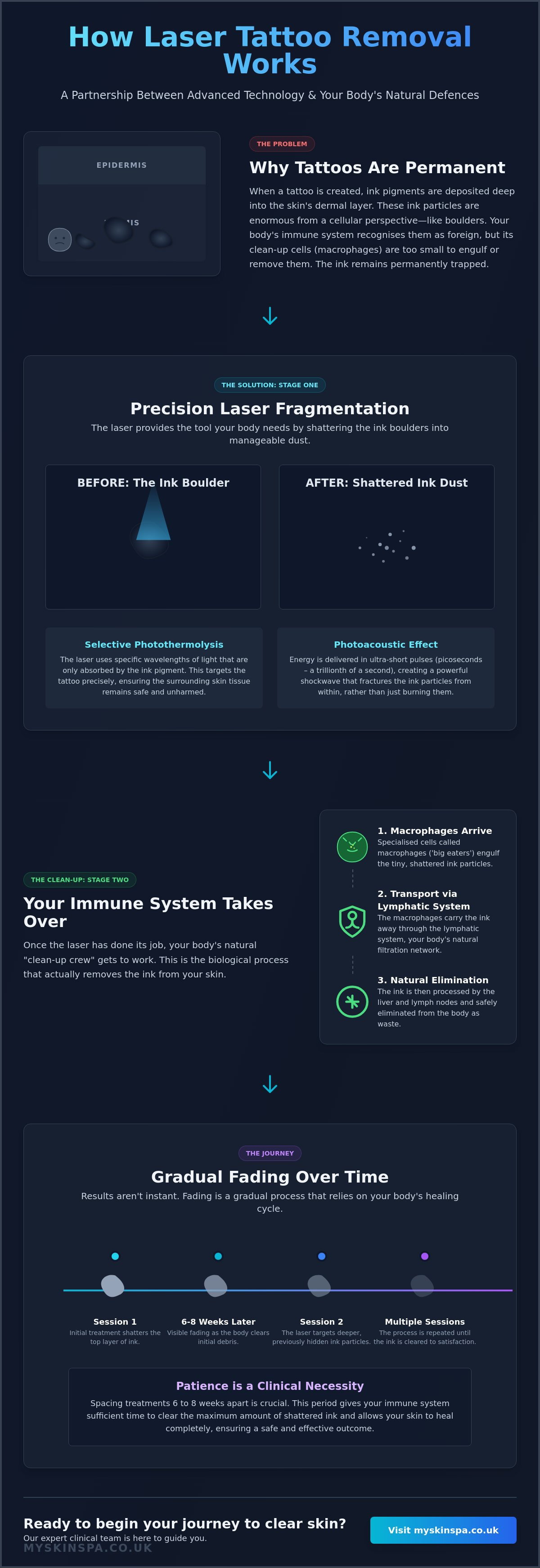
Why is a tattoo permanent? When the needle deposits ink into the dermis, it creates pigment clusters far too large for your immune system to manage. These ink boulders remain trapped because your body's natural defences cannot engulf or move them. Understanding the science of tattoo removal involves looking at how we use light to break these clusters apart without damaging the healthy skin around them. It is a process that is clinical, precise, and effective.
Selective photothermolysis is the core principle of how laser tattoo removal works. This sophisticated method ensures that specific wavelengths of light are absorbed only by the ink pigment whilst the surrounding tissue remains untouched. Different colours require different wavelengths; black ink is the most versatile as it absorbs almost all laser frequencies, whereas vibrant blues or stubborn greens need specialised settings to respond. This targeted approach is what makes modern removal both safe and successful.
Selective Photothermolysis Explained
To protect your skin, we carefully manage the thermal relaxation time. This is the duration a target needs to lose half of its heat. By delivering laser energy in ultra-short bursts, we ensure the ink reaches the necessary temperature to shatter before that heat can escape into the surrounding skin. This prevents burning, avoids scarring, and maintains the skin's integrity. It is a delicate balance of power, speed, and safety that prioritises your comfort and long-term skin health.
From Boulders to Dust: The Fragmentation Process
Visualise your tattoo ink as a collection of heavy rocks sitting beneath the surface. For your body to clear them, those rocks must become dust. The laser achieves this by causing the ink particles to expand and contract at an incredible rate. This rapid change creates a mechanical shockwave that fractures the pigment from within. The photoacoustic effect is the primary mechanism of modern removal, using pressure rather than just heat to disintegrate the ink into microscopic fragments.
We measure these laser pulses in nanoseconds or even picoseconds. These speeds are almost difficult to imagine; a picosecond is one-trillionth of a second. This technological precision is what allows us to turn permanent ink into tiny particles that your body can finally recognise as waste. You aren't simply erasing a past choice; you're empowering your body to heal, restore, and renew your skin's natural appearance. Once the ink is sufficiently fragmented, the next stage of the journey begins within your own immune system.
The Body’s Clean-up Crew: How Your Immune System Removes Ink
While the laser technology provides the necessary catalyst, the actual disappearance of your tattoo is a biological feat performed by your own body. Once the laser has shattered the pigment into microscopic dust, your immune system identifies these fragments as foreign invaders. This is the essential second half of how laser tattoo removal works; without your body's natural "clean-up crew," the shattered ink would simply settle back into the skin. It is a partnership between advanced clinical technology and your own internal physiology.
The Role of Macrophages in Ink Clearance
The primary workers in this process are specialised white blood cells known as macrophages. Their name literally translates to "big eaters," and their job is to engulf and digest cellular debris and foreign substances. Before treatment, the ink particles were too large and heavy for these cells to move. After the photoacoustic shockwave breaks them down, these macrophages can finally "eat" the ink dust. They then carry the pigment into the lymphatic system, where it is filtered through the lymph nodes and eventually expelled from the body. This process is safe and natural, provided the equipment used meets the standards highlighted by the FDA on tattoo removal safety.
Why Patience is a Clinical Necessity
Biological processing takes time. This is why you won't see the full results of a session immediately after leaving the clinic. The fading happens gradually over several weeks as your macrophages work through the debris. We typically space treatments 6 to 8 weeks apart to allow your immune system to complete this cycle and your skin to heal fully. Rushing this timeframe doesn't speed up the clearance; it only increases the risk of skin irritation without providing any additional benefit to the ink removal process.
Your lifestyle choices play a significant role in the efficiency of this "clean-up" phase. Staying well-hydrated keeps the lymphatic system fluid and active, whilst regular exercise boosts the circulation needed to move macrophages to and from the treatment area. Conversely, smoking can significantly slow down the process by constricting blood vessels and dampening the immune response. Proper tattoo removal preparation is vital for ensuring your body is in the best possible state to respond to treatment. If you are ready to begin this transformative journey, our experts are here to guide you through every step of your Laser Tattoo Removal experience.
Precision Technology: Q-Switched vs Picosecond Lasers
The efficacy of your treatment depends entirely on the precision of the equipment used. Whilst the previous sections explained the biological response, the technical catalyst for that response is the laser’s ability to deliver energy with extreme speed and specific wavelengths. Understanding how laser tattoo removal works at a technical level requires a look at the evolution from traditional heat-based systems to modern, pressure-driven technology. It is a distinction between simply heating the ink and shattering it with clinical accuracy.
Choosing medical-grade equipment over "beauty-grade" alternatives is a fundamental safety requirement. High-end clinical devices offer superior calibration, stable energy delivery, and the ability to target ink whilst bypassing the melanin in your skin. This is particularly vital for those with darker skin tones, where the risk of pigment changes is higher. Modern advancements allow us to use longer wavelengths that safely reach deep-seated ink without disrupting the surface layers of the dermis.
Wavelengths and the Colour Spectrum Challenge
A single laser cannot treat every tattoo. Different ink colours absorb different light frequencies, making a multi-wavelength approach essential for complete clearance. Black and dark blue inks are generally the most responsive because they absorb the 1064nm wavelength, which penetrates deeply and shatters pigment efficiently. In contrast, red and orange inks require a 532nm wavelength, which is absorbed closer to the surface.
Stubborn shades like vibrant green, sky blue, or yellow present the greatest challenge. These colours often require specialised wavelengths, such as 694nm or 755nm, to achieve significant fading. Without the correct wavelength, the laser energy simply reflects off the ink rather than being absorbed. A comprehensive clinical review of laser tattoo removal confirms that matching the specific laser frequency to the ink’s chemical composition is the only way to ensure a successful outcome.
Nanosecond vs Picosecond: Which is Superior?
The primary difference between laser types is the pulse duration, or the "speed" of the light delivery. Traditional Q-switched lasers operate in nanoseconds, which are billionths of a second. These lasers rely largely on photothermal energy, which means they use heat to break down the ink. Whilst effective, this method can sometimes lead to more heat buildup in the surrounding tissue, requiring longer recovery times between sessions.
Picosecond technology represents the next generation of care, delivering pulses in trillionths of a second. This incredible speed shifts the mechanism from a thermal effect to a photoacoustic one. Instead of just heating the ink, the laser creates a rapid pressure wave that pulverises the pigment into much finer particles than a nanosecond laser can achieve. This often results in fewer sessions for certain ink types and a lower risk of thermal damage to the skin. The choice between these technologies is never "one size fits all"; it depends on your tattoo's age, depth, and the specific chemistry of the ink used.
The Patient Journey: What to Expect During Removal
Transformation is a structured journey rather than a singular event. Whilst the science behind the laser is complex, your experience should feel clear, safe, and empowering. Every successful outcome begins with a meticulous clinical consultation and a mandatory patch test. This initial step allows us to observe your skin's immediate reaction to the laser, ensuring the settings are perfectly calibrated for your specific ink and skin type. It is a vital safeguard that defines how laser tattoo removal works in a professional, medical-led environment. We never rush this process; your safety and the integrity of your skin are our absolute priorities.
Understanding the "Frosting" Phenomenon
One of the most surprising moments during your first session is the appearance of "frosting." As the laser hits the pigment, the rapid heat creates tiny bubbles of carbon dioxide gas within the skin. This causes the tattoo to turn white almost instantly. Whilst it may look startling, frosting is actually a positive clinical sign. It indicates that the laser has successfully interacted with the ink particles and the shattering process has begun. This effect typically subsides within twenty to thirty minutes, leaving the skin looking slightly red or swollen as the body begins its natural healing cycle. It is important to distinguish this normal gas release from adverse reactions like deep blistering, which is why having an expert practitioner is essential.
Pain Management and Skin Comfort
A common concern for many clients is the level of discomfort involved. Most people describe the sensation as similar to a hot elastic band snapping against the skin or the quick splash of grease from a frying pan. To ensure your comfort, we utilise advanced Zimmer cooling systems that deliver a continuous stream of chilled air to the treatment area before, during, and after each laser pulse. This numbs the nerve endings and significantly reduces the heat sensation. By managing the temperature of the skin, we can maintain a calm and controlled environment for your treatment.
Dispelling common tattoo removal myths regarding permanent damage is a key part of our patient care. When performed correctly, the laser does not cause scarring; instead, it works in harmony with your body’s restorative processes. Following your session, you will receive a specific aftercare protocol to protect the area whilst it heals. You will notice the tattoo gradually fading over the following weeks as your immune system clears the fragmented ink. This progress continues long after you leave the clinic, bringing you one step closer to your desired aesthetic result with every visit. If you are ready to reclaim your skin, you can start your transformation with expert Laser Tattoo Removal at our specialised clinic.
Expert Tattoo Removal in Stourbridge: The My Skin Spa Advantage
Choosing the right clinic is a decision that impacts your safety, your results, and your skin's long-term health. Whilst the previous sections detailed how laser tattoo removal works through light and biology, the final component is the expert behind the device. At My Skin Spa, we've created a unique environment where high-end medical technology meets a welcoming wellness sanctuary. This balance ensures you receive the most advanced clinical care within a space designed for your comfort and emotional well-being. We believe that aesthetic treatments are a form of essential self-care, and our goal is to help you heal, restore, and renew your appearance.
Our commitment to the latest laser technology in the West Midlands ensures you have access to industry-leading equipment that delivers results with clinical rigour. We don't just provide a service; we offer a transformation. Understanding how laser tattoo removal works is only the first step. The second is choosing a partner who provides a clear roadmap for your journey, ensuring you feel empowered and reassured at every stage. From the initial consultation to the final clearance, your experience is managed with the precision and safety you deserve.
NHS Roots and Clinical Excellence
Our foundation is built upon the medical expertise of our founder, whose NHS-trained clinical background informs every protocol we follow. This medical heritage means our safety standards far exceed those found in traditional beauty salons. We don't just focus on ink clearance; we prioritise the fundamental health of your skin. By integrating principles of "healthy ageing" into our removal plans, we ensure your skin remains resilient, vibrant, and healthy throughout the process. Every treatment is a commitment to precision, safety, and comfort, ensuring your journey is grounded in expert-led reliability.
Your Local Stourbridge Specialist
Selecting a local skin clinic Stourbridge clients can trust allows for a level of personalised care that larger franchises often lack. We understand that your removal journey is deeply personal, often tied to a desire for self-confidence and internal comfort. Being situated in the heart of Stourbridge enables us to provide consistent follow-up care and a strategy tailored specifically to your unique skin type and ink chemistry. We don't believe in a one-size-fits-all approach; instead, we offer a bespoke partnership that values excellence, clarity, and visible success.
We invite you to book a consultation at our Stourbridge centre to begin your transformation. Here, you can discuss your goals in a professional setting that respects your individual needs and empowers you to move forward. Reclaim your skin and restore your confidence with a team that views aesthetic care as a vital pathway to feeling comfortable in your own skin. Your journey toward a clear, natural appearance starts with a single, expert-led conversation.
Reclaim Your Skin with Expert Clinical Care
Understanding how laser tattoo removal works is the first step toward a successful transformation. You've discovered that the process relies on a precise partnership between advanced laser shattering and your body's natural immune response. By choosing medical-grade technology and expert-led protocols, you ensure that your skin remains healthy whilst the unwanted ink gradually fades away. This isn't just about erasing a past choice; it's about restoring your self-confidence through a safe, clinical journey.
My Skin Spa has been based in the heart of Stourbridge since 2017, providing a sanctuary where clinical rigour meets restorative care. Founded by an NHS medical professional, we are specialists in advanced Q-switched and CO2 laser technology. We customise every treatment plan to align with your specific skin health and aesthetic goals. If you're ready to begin your own roadmap to clearance, Book your clinical tattoo removal consultation at our Stourbridge clinic today. Your journey to skin that feels like you again is closer than you think, and we are here to support you at every step.
Frequently Asked Questions
Is laser tattoo removal safe for all skin types?
Laser tattoo removal is safe for all skin types when performed with the correct technology and expert calibration. Practitioners use the Fitzpatrick scale to determine the safest settings for your specific skin tone. For darker skin, we utilise longer wavelengths that bypass surface melanin to target the ink directly, preventing pigment changes and ensuring a safe outcome for every client.
Can you completely remove a tattoo or will a shadow remain?
Most tattoos can be removed completely, though some may leave a faint "ghost" image or shadow. This usually depends on the depth of the original ink and whether the skin was scarred during the tattooing process itself. A professional clinical assessment helps manage your expectations, ensuring you understand the likely level of clearance for your specific tattoo history.
How many sessions does it actually take to see results?
A typical course requires between 6 and 12 sessions to achieve significant clearance. You will likely see the first signs of fading after your second or third visit. The exact number of treatments depends on factors like ink density, the age of the tattoo, and your body's individual immune response efficiency.
What happens if I don’t wait long enough between sessions?
Rushing the process increases the risk of skin irritation and does not actually accelerate the ink clearance. Your immune system needs a minimum of 6 to 8 weeks to process and remove the shattered ink particles through the lymphatic system. Scheduling sessions too closely together can lead to unnecessary tissue stress without providing any additional clinical benefit.
Can I get a new tattoo over the area once it is removed?
You can certainly get a new tattoo over the treated area once the skin has fully recovered and settled. Most artists recommend waiting at least three to six months after your final laser session. This ensures the tissue is strong, healthy, and ready to hold new pigment effectively for a high-quality cover-up.
Why do some colours take longer to remove than others?
Different colours absorb light at varying frequencies, which is a fundamental part of how laser tattoo removal works. Black ink absorbs all laser wavelengths, making it the easiest to shatter and clear. Vibrant greens, sky blues, and yellows reflect more light, requiring specialised wavelengths and often more sessions to achieve a complete result.
Does laser tattoo removal cause permanent scarring?
Permanent scarring is extremely rare when using medical-grade lasers and following expert-led protocols. Modern technology uses photoacoustic pressure to disintegrate ink rather than relying on excessive heat that could damage the dermis. Following your practitioner's specific aftercare advice is the best way to ensure the skin heals perfectly and remains resilient.
What is the most important part of tattoo removal aftercare?
Protecting the treated area from sun exposure is the most critical part of your aftercare routine. UV rays can trigger pigment changes in the healing skin, leading to hyperpigmentation or uneven tones. Keeping the area clean, hydrated, and shielded from the sun ensures your body can focus entirely on clearing the ink fragments and restoring your skin.