






Choosing an Aesthetics Practitioner: A Clinical Safety Checklist
By July 2026, the era of the "unregulated" aesthetics industry officially ends as mandatory licensing becomes law across England. You've likely felt that familiar pang of anxiety whilst searching for a reliable aesthetics practitioner, wondering if a provider is a qualified medical expert or simply someone with a weekend certificate. It's natural to fear an unnatural, "frozen" appearance or, more importantly, a clinical complication that could have been avoided. You deserve to feel empowered, informed, and entirely safe in your skin journey.
We'll show you exactly how to vet a provider to ensure clinical excellence, rigorous safety protocols, and those coveted, subtle results. This guide provides a clear roadmap through the new regulatory landscape, including the importance of face-to-face consultations and Ofqual-regulated qualifications. From understanding Level 5 standards for laser hair removal to verifying practitioner insurance, you'll discover how to choose a specialist who treats your face with the precision, care, and expertise it deserves. Let's explore the essential checklist for your peace of mind.
Key Takeaways
- Learn why the distinction between a beauty therapist and a medical-led aesthetics practitioner is vital for your safety and long-term results.
- Discover how to verify essential medical registrations and ensure your provider holds specific certifications for advanced devices like the SkinPen or Soprano Titanium.
- Understand the critical differences in clinical standards between a sterile medi-spa environment and a standard beauty salon to minimise procedure risks.
- Master the five essential questions to ask during your consultation to confirm your specialist’s expertise and emergency protocols.
- Identify the hallmarks of a trusted clinic where clinical precision meets a person-centred approach for subtle, healthy-ageing outcomes.
What is an Aesthetics Practitioner and Why Does Their Background Matter?
An aesthetics practitioner is a specialist who operates at the intersection of clinical medicine and cosmetic enhancement. They provide non-surgical treatments designed to improve skin health, restore facial volume, and reverse the visible signs of ageing. Unlike traditional beauty therapists, these professionals perform procedures that actively penetrate the skin barrier or utilise high-intensity energy devices. In the current UK landscape, the term "practitioner" is often used loosely. This regulatory gap means that standards of care, hygiene, and anatomical knowledge vary significantly between providers. Choosing a professional with a medical foundation, such as an NHS background, ensures your treatment is rooted in clinical safety, patient advocacy, and precise technical skill.
The motivation behind seeking these treatments has evolved. We have moved beyond the era of "vanity" into a space of restorative self-care. It is no longer about looking different; it is about feeling comfortable, confident, and renewed. By partnering with a medical expert, you ensure that your aesthetic journey is a form of essential restoration rather than a risky luxury. This clinical approach prioritises your long-term well-being over quick, often unnatural, fixes.
The Difference Between an Aesthetician and a Practitioner
Aestheticians are experts in surface-level skincare. They provide essential maintenance through traditional facials, superficial peels, and general skin advice. However, a practitioner performs clinical interventions that reach the deeper dermis. Confusing these two roles can lead to suboptimal clinical outcomes or increased risks of infection. True Aesthetic medicine requires a practitioner to manage complex tissue responses and follow strict sterile protocols that go far beyond the capabilities of a standard high-street salon.
The Importance of Anatomical Knowledge
Safety in aesthetics relies on an intimate understanding of facial muscle structure, vascular maps, and nerve pathways. Without this expertise, you risk asymmetrical results, "frozen" expressions, or vascular complications. This level of anatomical precision is particularly vital during advanced procedures like CO2 laser resurfacing, where the practitioner must carefully manage heat distribution across varying skin layers. A medically trained aesthetics practitioner possesses the diagnostic skills to identify contraindications and the clinical judgment to manage emergencies. They ensure every pulse of a laser or placement of a needle is performed with absolute accuracy and care.
The Essential Qualifications Checklist: What to Look For
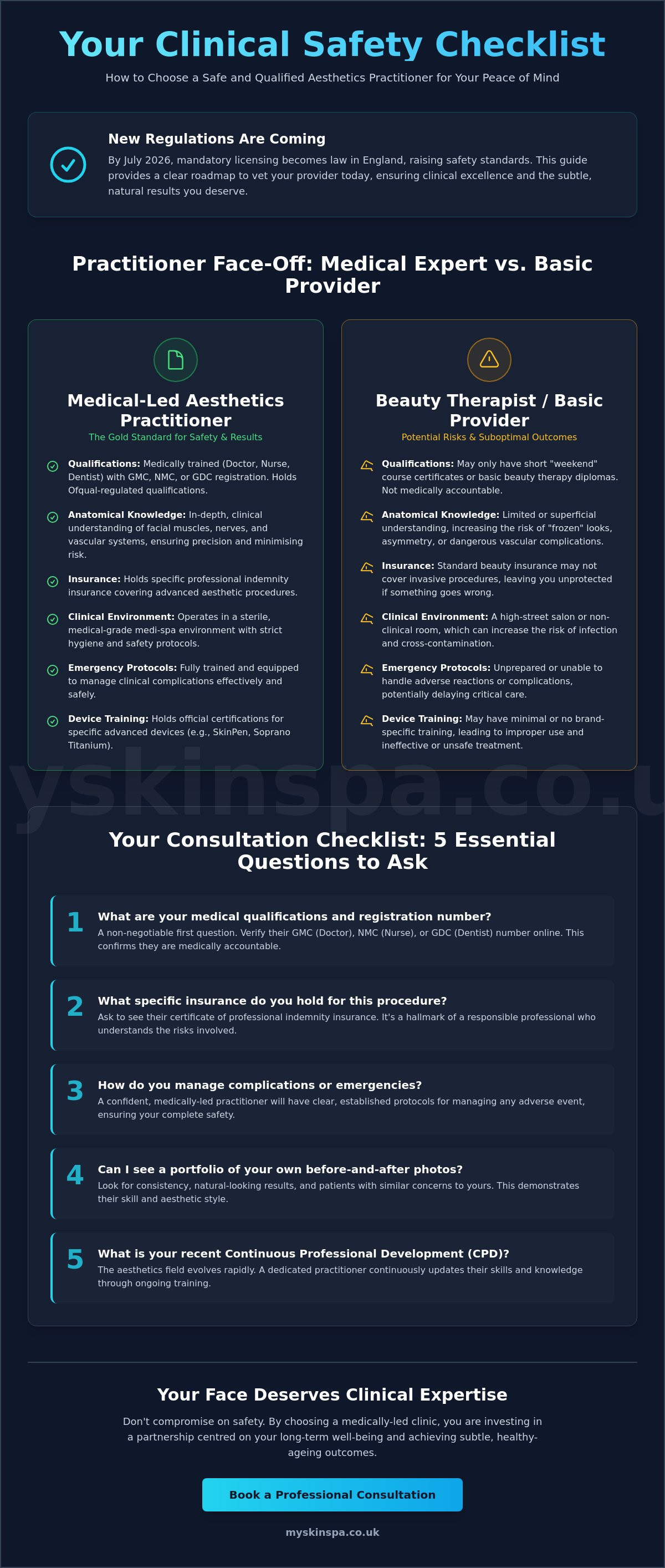
Finding a safe aesthetics practitioner requires more than a quick social media search. You need objective evidence of clinical competence. A reputable professional will always be transparent about their medical registration. Whether they are a doctor, nurse, or dentist, they should hold a valid registration number with the GMC, NMC, or GDC. This ensures they are answerable to a professional body that prioritises patient safety above all else. Organisations like the British College of Aesthetic Medicine set high ethical codes that distinguish true specialists from those merely following a trend.
Insurance is another non-negotiable factor. Standard beauty insurance often fails to cover the complexities of clinical aesthetics. Your practitioner must hold specific professional indemnity insurance. This protection isn't just a legal formality; it's a sign of a responsible professional who understands the gravity of their work. Additionally, look for evidence of Continuous Professional Development (CPD). Techniques in 2026 move fast. A specialist who hasn't updated their training recently isn't providing the safest or most effective care. You can review our clinical lead’s credentials during your visit to feel completely confident in your choice.
Medical Degrees vs. Short Courses
The industry is currently flooded with "weekend courses" that claim to teach complex procedures in hours. This is a significant risk for patients. For instance, SkinPen microneedling Stourbridge requires an understanding of wound healing responses that a two-day seminar cannot provide. By 2026, Ofqual-regulated qualifications at Level 5 for skin treatments and Level 7 for injectables have become the gold standard. When you ask about experience, don't just ask how many treatments they've done. Ask how they were trained to manage rare but serious complications. Clinical backgrounds provide the diagnostic "muscle memory" needed to keep you safe.
Manufacturer-Approved Training
The technology used is just as important as the person operating it. Genuine specialists use medical-grade, brand-name equipment like the Soprano Titanium or SkinPen Precision. They should hold certificates directly from these manufacturers. Unbranded or generic machines are a major red flag amongst practitioners; they lack the rigorous clinical testing required for predictable results. You can usually spot genuine certification displayed on the clinic wall. If it isn't visible, don't be afraid to ask to see it. This transparency is the hallmark of a aesthetics practitioner who values excellence and clarity.
Clinical Standards: Medi-Spas vs. High-Street Beauty Salons
Where you receive treatment matters just as much as who provides it. A high-street beauty salon often uses multipurpose cubicles for varied services like waxing or brow tinting. In contrast, a professional aesthetics practitioner operates within a dedicated clinical environment designed for minor procedures. This means non-porous surfaces, medical-grade sanitisation, and sterile equipment. It's the vital difference between a "clean" room and a "clinically safe" one. Excellence in aesthetics requires a space that prioritises hygiene, precision, and patient safety above all else.
Safety also extends to the administrative rigour of the clinic. Detailed patient records are a non-negotiable standard. Your practitioner must document your full medical history, current medications, and any previous cosmetic work before you even see a treatment room. This data allows them to identify potential contraindications that a less-specialised provider might miss. They should also provide a formal consent process that clearly outlines the risks, benefits, and expected outcomes of your procedure. Transparency is the foundation of trust.
Emergency protocols distinguish a medical specialist from a hobbyist. If an adverse reaction occurs during a treatment, your practitioner must have the clinical knowledge and the necessary medication on-site to intervene immediately. They don't just hope for the best; they prepare for every eventuality. This commitment to safety continues after you leave the clinic. A reputable professional always offers a formal follow-up review to assess your healing, address any concerns, and ensure you're delighted with your results.
Why a Medi-Spa Offers the Best of Both Worlds
A medi-spa bridges the gap between the clinical authority of a medical facility and the aspirational warmth of a wellness sanctuary. This environment allows you to undergo advanced procedures in a space that feels like a restorative retreat rather than a cold hospital ward. For a comprehensive look at what to expect, read The Ultimate Guide to Skin Medi Spa Treatments in Stourbridge (2026). Integrating medical-grade skincare into these clinical routines ensures your skin is prepared, protected, and nourished for optimal results.
Red Flags in the Treatment Room
Your intuition is a powerful tool. Be alert to these warning signs when visiting a new aesthetics practitioner:
- Non-clinical environments: Practitioners working from home or in domestic spaces cannot guarantee the same level of sterility as a dedicated clinic.
- Lack of safety equipment: A missing sharps bin or the absence of visible sanitisation stations is a major red flag for cross-contamination risks.
- High-pressure sales: You should never feel pushed to "buy now." A true specialist respects a cooling-off period, allowing you to make an informed, confident decision.
The Consultation Checklist: 5 Questions to Ask Your Practitioner
The consultation is your opportunity to interview the person behind the procedure. It should never feel like a sales pitch; instead, it is a clinical assessment where your safety and goals take centre stage. A professional aesthetics practitioner welcomes scrutiny and provides transparent, evidence-based answers. Use this checklist during your appointment to ensure you are in expert hands. You can book your clinical consultation with our team to experience this high standard of care firsthand.
- "What is your medical background and how long have you performed this specific treatment?" Look for a history in the NHS or a clear medical degree. Experience counts, but specialised experience in the specific device being used is even more valuable.
- "What are the specific risks and how do you manage complications?" Every clinical procedure carries a degree of risk. A specialist who claims there are "no risks" is a red flag. They should explain exactly how they are equipped to handle an adverse reaction.
- "Which specific products or brands do you use and why?" They should name industry leaders like SkinPen or Soprano Titanium. These brands invest in clinical trials to prove their safety and efficacy.
- "Can I see before-and-after photos of your own patients?" Stock photos from a manufacturer's brochure are not enough. You need to see the practitioner's own work to judge their aesthetic eye and clinical precision.
- "What is the long-term plan for my skin health, not just today?" Aesthetics is a journey of healthy ageing. A good specialist looks at the big picture rather than offering a one-off, "quick fix" solution.
Evaluating the Answer: What a Good Practitioner Says
A reputable specialist is proud to discuss their medical history and professional journey. They will provide a realistic, sometimes conservative, expectation of what can be achieved. If a result isn't possible or safe, they will tell you. This honesty is the hallmark of clinical authority. They may also suggest a holistic approach to your aesthetic goals. This might involve skin revision through Laser Tattoo Removal Stourbridge or medical-grade resurfacing to create a clear, healthy canvas. Their focus is always on your internal comfort and long-term well-being.
The Importance of the "Cooling-Off" Period
You should never feel rushed into a procedure on the same day as your consultation. A professional practitioner respects your decision-making process and encourages a cooling-off period. This time allows you to reflect on the information provided, consider the emotional benefit of the treatment, and ensure you feel entirely confident. True transformation requires clarity and calm. A specialist who pressures you for an immediate "yes" is prioritising profit over your psychological and physical safety. Your journey toward self-confidence should always move at your own pace.
Why My Skin Spa Clinic is Your Trusted Stourbridge Specialist
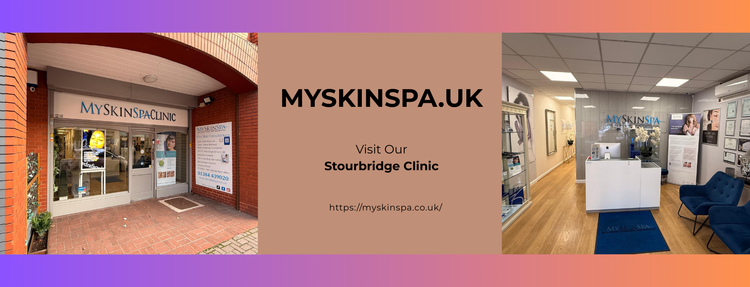
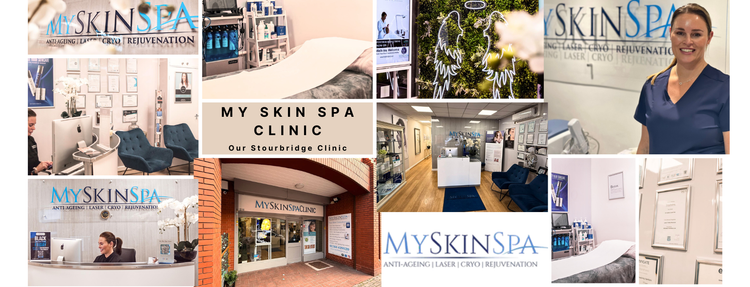
My Skin Spa Clinic stands as a beacon of clinical excellence in the heart of Stourbridge. Founded by a former NHS professional, our practice was built on a foundation of medical rigour, patient safety, and deep-seated empathy. We understand that choosing an aesthetics practitioner is a deeply personal decision. It's about finding a partner who respects your anatomy whilst understanding your desire for renewal. In our boutique environment, clinical precision meets aspirational warmth; this ensures your journey is as restorative as the results themselves.
We don't believe in "one-size-fits-all" beauty. Every client receives a bespoke treatment plan tailored to their unique skin history and future goals. Whether you are seeking CO2 laser resurfacing to restore texture or Soprano Titanium Laser Hair Removal for smooth results, our approach remains person-centred. We treat the individual, not just the skin. This philosophy ensures that every procedure, from HydraFacial Deluxe sessions to Cryolipolysis Fat Freezing, enhances your internal comfort and natural appearance. Our Stourbridge clinic is designed to be a sanctuary where you feel empowered to invest in your own well-being.
Our Commitment to Safety and Excellence
Safety is the cornerstone of everything we do. Our clinic maintains rigorous hygiene standards that exceed basic industry requirements, providing a sterile space for all clinical procedures. As the mandatory licensing laws of July 2026 approach, we are already operating at the highest level of compliance. We prioritise ongoing training to master the latest non-surgical innovations, such as SkinPen Precision Microneedling and HIFU Non-Surgical Face Lifts. This dedication to excellence ensures you always receive the safest, most effective care available.
We focus on healthy ageing, helping you achieve a version of yourself that feels vibrant and entirely authentic. By using only premium, medical-grade technology, we eliminate the risks associated with generic machines. We take pride in being a trusted aesthetics practitioner for the local community, offering clarity and visible success in every treatment. Whether we are removing a cherry angioma or performing a HydraFacial Platinum, our focus on precision never wavers.
Start Your Transformation Today
Your journey toward self-confidence begins with a professional skin consultation. This is a dedicated space where we listen to your concerns, assess your skin health, and map out a clear path to success. We bridge the gap between advanced clinical treatments and your daily skincare routine; we provide a curated aesthetic that you can maintain with ease. You aren't just another appointment to us. You are a patient in safe, expert hands. Book your consultation today and discover the peace of mind that comes with choosing a medical-led specialist who values your health as much as your results.
Secure Your Aesthetic Future with Clinical Excellence
The journey toward skin rejuvenation should always be rooted in safety, precision, and trust. You now have the tools to distinguish a medical specialist from a standard high-street provider. By prioritising an aesthetics practitioner with a registered medical background and a dedicated clinical environment, you protect your health whilst ensuring subtle, healthy-ageing results. The right provider always prioritises your long-term well-being over immediate, temporary fixes.
At My Skin Spa Clinic, we bridge the gap between medical rigour and restorative self-care. Founded by an NHS-trained professional, our Stourbridge medi-spa is a premier destination for advanced treatments like CO2 laser resurfacing and SkinPen microneedling. We invite you to experience a partnership where your comfort is our absolute priority. You deserve to feel confident in the skin you're in, supported by experts who value clinical excellence as much as you do.
Book Your Expert Consultation at My Skin Spa Clinic today and take the first step toward a safer, more radiant future. Your transformation is waiting.
Frequently Asked Questions
Do I need a medical degree to be an aesthetics practitioner in the UK?
Technically, the UK does not currently require a medical degree to practice, but this is changing rapidly. From July 2026, a mandatory licensing scheme will require every aesthetics practitioner to be registered and accredited. Choosing a professional with a medical background, such as a nurse or doctor, ensures you're treated by someone already governed by strict clinical codes of conduct and emergency training.
How can I check if my aesthetics practitioner is qualified?
You should verify their medical status on the relevant professional register, such as the GMC for doctors, the NMC for nurses, or the GDC for dentists. Look for Ofqual-regulated qualifications at Level 5 or Level 7. It's also wise to check if they belong to voluntary accredited registers like Save Face or the JCCP, which audit clinic premises and practitioner insurance.
What is the difference between a doctor and a nurse practitioner in aesthetics?
Both are highly trained medical professionals, but they're overseen by different regulatory bodies. A doctor is registered with the GMC, whilst a nurse practitioner is registered with the NMC. In a clinical setting, the most important factor is their specific, advanced training in non-surgical procedures and their ability to identify contraindications or manage rare clinical complications with diagnostic precision.
What should I do if I am unhappy with my aesthetic treatment results?
Contact your practitioner immediately to request a formal follow-up review. A reputable professional will have a clear complaints policy and a duty of care to address your concerns or manage any adverse reactions. If they are a registered medical professional and you're still dissatisfied, you can escalate the matter to their regulatory body or the professional register they belong to.
Is it safer to go to a skin clinic or a beauty salon for fillers?
A clinical skin clinic is significantly safer because it's designed for minor procedures rather than general beauty treatments. These environments prioritise sterile protocols, medical-grade sanitisation, and emergency preparedness. Unlike a standard salon cubicle, a clinical room is a controlled space where the risks of cross-contamination are minimised and emergency medications are always on hand to manage complications.
How much should a consultation with an aesthetics practitioner cost in Stourbridge?
Consultation fees in the Stourbridge area vary based on the specialist's experience and the diagnostic technology used during the assessment. Some clinics charge a nominal fee to cover the practitioner's clinical time, whilst others may include this as part of a broader treatment package. This appointment is a vital safety step where your medical history is reviewed and a bespoke treatment plan is created.
Can an aesthetics practitioner prescribe medicine if something goes wrong?
Only a practitioner who is a qualified prescriber, such as a doctor, dentist, or independent nurse prescriber, can legally issue prescription-only medicines. This is a critical safety consideration. If a complication arises, a prescriber can immediately provide the necessary medication to resolve the issue. Always ask if a prescriber is on-site before commencing any treatment that carries a risk of clinical complications.